Chapter 1. Introduction.
How to get to America
How to make a dream come true? Make it a goal! Break down what you want into components and step by step, overcoming all difficulties, persistently move towards the goal. In my plans for traveling around the globe, America—the land of contradictions—was one of the first places. The most mysterious one, surrounded by so many myths and legends. So what is this "land of the free" really like?
I am 21 years old and I have been to the other side of the planet. I lived, worked, made friends, felt sad and happy with other students from Russia and new American friends, and all this only because I wanted it very much. Now, spending a summer in America is almost the cheapest option among foreign tours. First of all, for $2,000 (including the program cost, medical insurance, Moscow-New York-Moscow flight, and money for the first few weeks), you can spend from 2 to 5 months practicing the language and living independently away from home. Thousands of students from Russia and other countries decide to do this every year and have an unforgettable summer.
Impressions
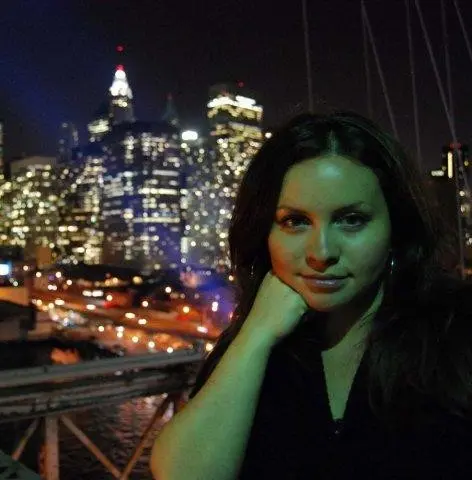
I was lucky, and I not only recouped the program costs but also managed to travel and buy electronics, which are more expensive here and harder to get. In just over three months, of which I worked for 2.5, I managed to visit cities like New York, Los Angeles, Seattle, Denver, as well as small towns in the states of Montana and North Dakota. I stood at the foot of the Statue of Liberty, walked through the pavilions where all Hollywood blockbusters are filmed, visited the toy-like Disneyland, swam in two oceans (Pacific and Atlantic), rode horses with cowboys, drove a real Harley, and much, much more.
Work, housing, food
My employer was waiting for me in a small town on the border of Montana and Canada; besides me, three students from Russia and one boy from Moldova worked there. I worked and lived (for free) in a hotel and restaurant (I also ate for free) for the same owner. Usually, accommodation and food cost students $250 a month (based on 3-4 people in a two-bedroom house) and about $150 a week for food. As a rule, things like food and accommodation are clarified in advance back home, i.e., the student can immediately calculate how much money to take for the first time. The average wage is $8 per hour + $12 per hour if working more than 8 hours a day. I worked from 8 to 14 hours a day and rarely took days off, simply because I didn't get tired.
Roads
In the second week, there was a holiday in our town; all organizations had to dress up in costumes and drive through the whole city, throwing candy to children. Our theme was Sherwood Forest and Robin Hood's entourage. On the same day, we were interviewed (after all, they hadn't had Russians before, let alone in such numbers), and soon a local newspaper came out with our photos. After that, although even before, popularity arrived. We were given rides to stores and brought back with our purchases, greeted on the streets, treated to things and invited to visit, taken swimming, and so on. In small towns, they rarely walk, and they are very surprised to see you carrying groceries home. In one-story America, pickup trucks are common, which, although they consume a large amount of gasoline—which on average costs the same as ours—are very useful in everyday life. In some states, driving is allowed from age 15, and agricultural machinery from 13. A vehicle can be purchased here from $1,000, and it will actually run. The roads are without potholes and smooth almost everywhere, and you rarely encounter road work. In large cities, on the contrary, there are constant fierce battles for parking spaces, specially designated parking spots, and small cars of global brands parked tightly, sometimes several blocks away from the desired location.
Customs
In general, Americans are very curious, friendly, and welcoming people, although they say about themselves that they are a "closed nation." You start smiling here by yourself, meeting the same smiles everywhere. And although some of them are automatic, believe me, even reflex smiles are much more pleasant than frowning, exhausted faces. Working as a bartender in a restaurant, I managed to hear so many amazing stories, both funny and sad, which allowed me to be convinced of the positive attitude of this nation, one of whose main principles is "never lose heart under any circumstances." People here are used to working hard and often work multiple jobs.
Education
For non-residents of the state, education is more expensive, and for foreigners, even more so. On average, students pay $25,000 per year for a bachelor's degree and $5-7k for a master's. Therefore, education here is not just valued, but worth its weight in gold; not everyone can afford a full higher education. Kids go to work very early, at least on weekends.
Elderly and disabled people
The first thing that catches your eye in the first hours of being in this country is how much is done for the elderly and disabled, which allows them not only to feel like, but to be full members of society. This includes not only benefits and pensions, on which they can travel without denying themselves anything, but also such trifles as signs for the blind, equipped restrooms (everywhere and for free), traffic lights with voice mode, ramps on all curbs for wheelchairs, and much more.
Sports
Contrary to popular belief, Americans are by no means fat, and more than half of the population plays sports. Even if a gym membership costs a lot, anyone can always afford to run, ride a bike, or rollerblade in specially designated scenic areas for free. As a rule, many restaurants have a special lean menu and healthy organic cuisine. Although there are very obese people, there are fewer of them in big cities.
Products
On average, they cost the same as ours, except for bread, which can lie open for a week and not dry out, the price of which starts from $1.5. The larger the city and the closer the supermarket is to the center, the more expensive it is. In large cities, it is harder to find tasty, normal fruits and vegetables; in small ones, they are everywhere. There is no sour cream (its analog is noticeably different), condensed milk, it is difficult to find buckwheat, and the kefir is tasteless, although I am sure if you set a goal, you can find it. Units of weight differ from ours: liquids in gallons, volumes in pounds (and temperature in Fahrenheit, which I could never get used to, noting to myself that it is good when it is above 80F, and the sockets are like for our radio—flat and small). I was often asked to cook something of ours, especially borscht. And although I cook quite well, the soup always turned out somehow wrong; the same thing happened with dumplings—maybe it was the meat, maybe the water, or maybe the air itself is different here.
Alcohol and smoking
Alcohol is sold here only from the age of 21, and this is very carefully monitored, with them constantly asking for your ID. In some establishments, there are so-called "happy hours" when drinks are half price, usually from 4:30 PM to 5:30 PM. They drink a lot, but somehow very carefully and decently; meeting a drunk person on the street here is a nonsense. Drinking and smoking on the streets is strictly prohibited; the punishment varies from a reprimand to a fine. If you are spotted drunk, and even with a bottle of beer, and there is a sober minor next to you, both get in trouble. Cigarettes start from $5, and smoking is allowed far from all establishments. For smoking in non-smoking hotel rooms, the fine is $200; there are few smoking rooms, and they are slightly more expensive. Many Russian guys who could not quit smoking at home quit here. Americans are stubbornly fighting for a healthy lifestyle.
Americans divide themselves into two groups of people. The first works to live. The second lives to work. In one-story America, the first group lives, usually with two or three children in the family; of course, this is a completely different situation in large cities where the second group lives, where a family is formed at the age of 30 and there is only one child in the family.
Many things are different there: some things are better, some things are missing, you miss some things, many things surprise you, some things shock you. America changes you. And whether it's for the better or for the worse depends on you.