Once you finally find your dream job, or at least a job that pays, the question of getting paid arises. Usually, you get paid with paychecks. They are issued at different times, but for us, it was once every 2 weeks. What is notable is that they keep one week in reserve. For example: you worked from the 1st to the 14th. But your first paycheck only covers the 1st to the 7th. Then you work from the 15th to the 29th. The second paycheck covers the 8th to the 22nd. So, one week remains in reserve. Therefore, when you plan to leave your employer at the end of the summer, remember that they still owe you for 1 week. You will need to work until the paycheck date, then stop, and after 2 weeks (during which you haven't lifted a finger), come back to collect the money you are owed. Alternatively, you can write a proxy note (this must be coordinated with your manager or the accounting department at your organization) for someone else to pick up your paycheck for you.
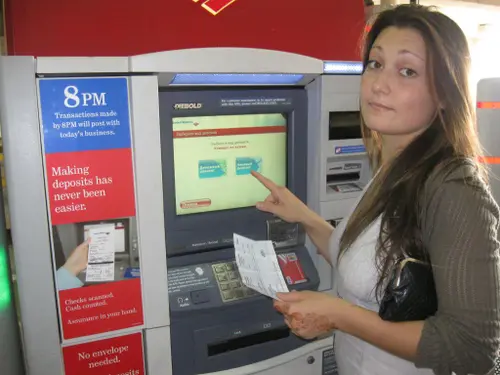
Next, you receive the coveted envelope. Inside, there will be an A4 sheet listing your work dates, clock-in/out times, taxes, percentages, and the total amount of your salary. The bottom part of the sheet is your actual paycheck. You cut it off and go to the bank. There are two options: either deposit the money into a savings account or cash it. In any case (if I'm not mistaken), you must have an account at that bank. At the very least, otherwise, there is some hassle with cashing it, etc. I'm not very well-versed in this, but the point is: either you get all the cash in hand, or you deposit the money onto a card. If you choose the second option, you can do it via an ATM or through a teller (but you will have to pay them for it). Via ATM: you just insert your card into the slot, select your language (Bank of America ATMs have Russian, I don't know about others), and calmly select that you want to make a deposit, specifically a check deposit. Then, insert the check into the slot that opens (or several checks in a stack; the smart ATM will figure it out). It will identify the check and display the amount on the screen. You confirm, and that's it. The money is on the card, the check is in the ATM. BUT. Only $200 will arrive on the card initially. The rest will arrive the next day. So don't worry and don't spend all the money immediately after the deposit.
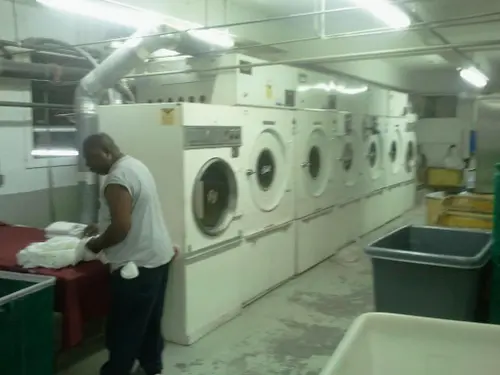
Laundry. At home, we don't even think about where to wash clothes. 99% of people have washing machines, and others soak them in a basin. In principle, the second option can be used in America too. But this is the States! How many times have we seen those rows of machines and sad people in their underwear waiting for their clothes in movies? This process happens at a Laundromat. There are many in the city; you just need to know where. Americans or Google Maps, which knows everything about everything, will help. It costs about $1.50 to wash and the same for drying. So wash to your heart's content)))
Food. Parents are always interested in whether their child is eating, and that there should be salads and soups, and blah-blah. That's what parents are for. You can eat at cafes (thankfully there are so many that your eyes will widen) and at home. The average bill in a cafe (not fast food) is about $15-20. In fast food, it's about $5-10 (depending on your appetite).
You can go to the supermarket and cook at home. But keep in mind that products are generally expensive. Fruits, vegetables, meat—everything is expensive. But if you pool your money, it will be more profitable) And actually, it's best to work as anyone in a restaurant... then you will always be full... they feed everyone there: waiters and dishwashers... everyone, always)