The alarm rings at 4:30 AM. No, you haven't lost your mind; the bakery just starts prepping pastries at 5. I get up with Misha to support him and make breakfast, go back to bed, and get up again at 8. By 9, Yulia and I arrive at the hotel.
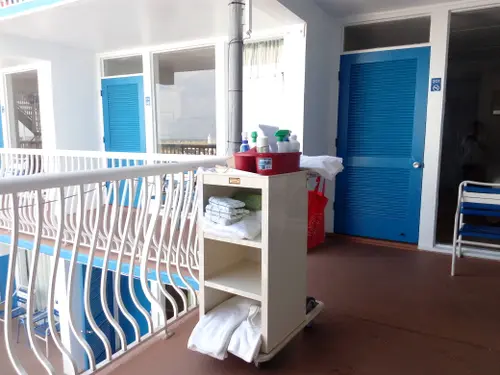
The cart is a housekeeper's best friend.
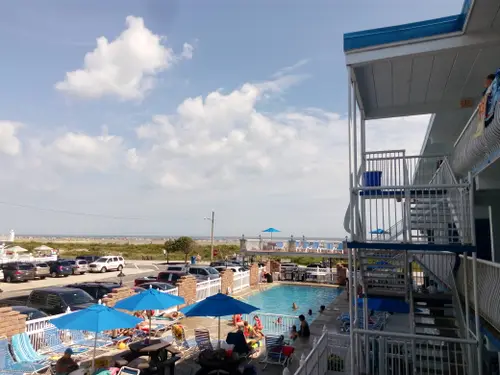
"Why do you need the ocean when you can swim in a warm pool?"
To be precise, there are three hotels, but only one housekeeping team. They are all middle-aged Mexican women who barely speak English. "Clean, dirty, towels, rug, thank you"—you start using only basic words yourself because they don't understand you otherwise. You memorize the algorithm of simple tasks and the names of a dozen cleaning products, and you learn how to make a bed beautifully. After a week, you start feeling like you're regressing. After three weeks, the feeling passes—and that scares you.
Every day is defined by the number of check-outs, make-ups, and tips. Tips can more than double your earnings, but building relationships with guests is a whole science—fascinating and unfathomable.
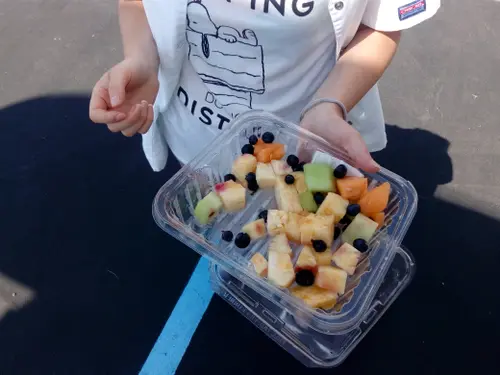
Tips in the form of food are a special kind of happiness.
On an easy day, you can take your time and finish by one; on a hard day, you're running around with your tongue hanging out until four. At five, you have to be at the restaurant, having stopped home first to shower and put on your uniform.
An evening at the restaurant is defined by one parameter: "busy" or "not busy." In the first case, you're running around like you've been scalded, smiling and clearing tables, while the kitchen can't keep up and makes many mistakes. By 11 PM, there are a couple of tables left, and you circle around hopefully, waiting for them to clear. Your brain can barely perceive reality, your hands go numb, your eyes are closing... In the second case, there's no work, no tips are expected, and you do everything slowly, which makes you fall asleep even faster. We return from the restaurant with Misha and Yulia, tiredly discussing the day. Tomorrow, it will all happen again.
Days off only happen at the restaurant—meaning you can spend half a day in blissful sleep.
...yes, that is exactly how most of our summer went. I read stories from J-1 participants, but I couldn't even begin to imagine how hard it would be. If at the beginning of the summer you are full of energy and plans, by the end, you are squeezed like a lemon. Your body aches around the clock, your back has been out for a month, and sleep is your only cherished desire.
Of course, work varies. Of course, it was our choice—you don't have to work that hard. Of course, this isn't what you imagine when looking forward to a trip to the USA, and it's not what you want to remember later—because there were many positive moments. But I can't help but write about it. And I would advise everyone planning to repeat our experience to assess their strength realistically and not build castles in the air. If you definitely don't want to burn out, it's better to look for positions as sales consultants, photographers, or waiters.