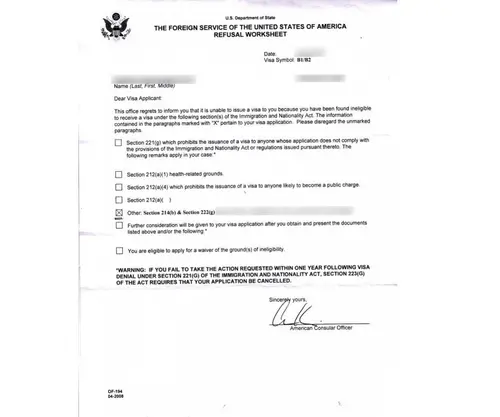
In general, you will get a general impression of the interview atmosphere from your agency's files. I read many pages, but I still didn't grasp the most important thing:
You are initially intended to be denied a visa.
(A polite version of "Go to hell")
Yes, that's not quite right, but you have no credit of trust, so if you just show up, you will be denied 100%. We won't rely on luck in my blog, so I suggest considering the path to a guaranteed visa.
There are two reasons for refusal: you are boring/unpleasant and no one needs you, or there is a risk that you will stay.
Entry data:
My strategy is fair for students of all years and undergraduates (if they are allowed to go on W&T) with English above Pre-Intermediate. It works best for 2nd-3rd year students. Regardless of your grades, university, recommendations, etc.
My interview happened with a very tough consul who gave out under 50% refusals per 1 interview. My average score is ~ 5/10.
(A bit of showing off for motivation)
So, two ways to pass the interview:
"I'm a simple person..."
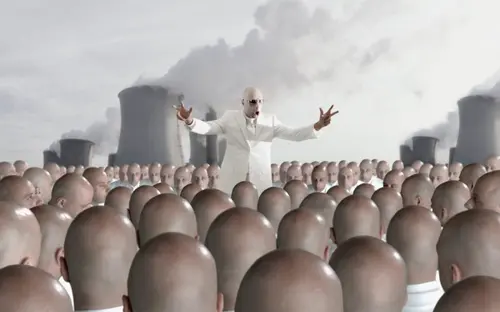
Almost all participants get a visa this way. But don't rejoice, if you are reading this, this method probably doesn't suit you very well. Although the agency files emphasize it - be simpler, show a connection with your homeland. Grades should generally be good.
Your task will be to forget about all ambitions, desires, etc. Here is your new image:
"My name is Maximka, I study at BSUIR in medical electronics because I want to work in hospitals and help people. I love my parents, my mom will set me up to work in a hospital. I love drawing and hanging out with friends, I love my friends very much. How will the trip experience help in the future? I want to see the world and learn new things, about medicine, go to conferences. Oh, next year we have a student conference, I need to collect material for it, I want to write a term paper on such and such a topic."
And yes, you absolutely cannot be nervous here.
And I have a rather mediocre idea of this point, so what is described above is not very objective.
I am making my country better.
I used this method. It is for those who do not want to forget about their ambitions and grovel before the consul.
So, let's move on to the algorithm.
- US interest.
You must be absolutely clear about the motivation of the US State Department for your trip via W&T.
Their interest is in spreading American culture around the world. Students, young minds - a gorgeous target audience, into whose heads any culture can be put, especially a free one. Everyone wants freedom so much now. Therefore, the ideal scenario for the US State Department: A student comes to America, travels, talks to people, in addition to this receives big money, buys gadgets, etc., returns home and tells everyone how cool it is, writes blogs, attracts even more people. 99% of students speak highly of the program (=America), they have already given America a credit of trust, such a, let's say, a sleeper agent in another country.
Hence your strategy is built: to show yourself as someone who implements this scenario with the best efficiency.
- Develop your image.
You need to show that you are or will be not the last person in your country and will be able to broadcast America's interests to the masses. Since you are students - the only thing you can talk about with a serious face is the university.
Sit down and remember your achievements. I'm not calling for making things up, but if you need to - do it. Remember your projects, scientific papers, initiatives, social projects (outside the university, but there is confirmation). Maybe you are a blogger? Or participated in exhibitions? What cool things have you done for your country?
(me under my house)
My image was like this (nothing made up):
"My name is Maxim, I study at the best engineering university in the country - BSUIR in Medical Electronics. An amazing specialty, I dream of creating improvements for the human body, which is why I enrolled. I spend all my free time on projects, one of which is a chip that tracks blood glucose levels. I am also interested in social projects capable of making Belarus better. I won a grant to implement one of my projects and am currently coordinating it with the city administration."
And here, before you is a guy who confidently sees his future, speaks inspiredly about his specialty and is already doing something in this direction (i.e., his team is in Belarus, abandoning it is putting the project in danger), also lives a social life, does big projects (and he also has financial obligations for the grant in Belarus, there is little point in leaving, especially when the project is close to implementation). He will return and will talk about America in his projects, and maybe it will give him money for implementation.
I had all the diplomas and papers on coordination on hand, they weren't asked for, but I showed them myself.
You should have a similar story of a person who has no reason to be denied a visa.
- Answers to questions.
(my start of work on questions)
You can google or your own agency will send you a list of questions asked at interviews. Write an answer to ABSOLUTELY EVERY QUESTION. You need to spend about a week or two on this, on all these questions. Write a little every day, repeat what you wrote every new day, say it out loud. Nervousness at the interview is wild in 90% of cases. In my second interview, I was also quite confident in my cool strategy, until 3 people in a row were refused before me. Therefore, you need to hammer the answers into your head.
- Dialogue plot
After the simple answers, you need to find the most basic questions, based on logic.
For my second time, they were like this (italics - questions based on my answers):
-
How do you see your future? What are you doing after university?
-
Why are you applying for the second time? Why do you think the second time will work?
2.2. What kind of misunderstanding, what projects and what experience?
-
Why do you want to go so much that you are applying for the second time? Purpose of the trip?
-
What about your grades? Where do you study?
4.1. What was your answer about arguing with teachers?
- Purpose of the trip (more specific)?
5.1. Why aren't you going to New York then?
These questions have their own varieties, but in general, the essence is the same. After writing down these questions, your task is to write a detailed answer for each question that reveals your entire image. Remember the joke about the student and the flea? Same thing. You see an example in the screenshot above.
Count on only one attempt before the consul. One question - one answer, the conclusion about the visa is made. Any question can be the first, so each answer must reveal your image.
First write in Russian, then in English.
(WTC, my last day)
- Cram
Everything is in the good old traditions of our education system. Stupidly cram your answers. Carry a piece of paper with answers and a piece of paper just with questions. See a question - say the answer to yourself. When alone - say it out loud. The task is to bring it to automatism. Forgot the answer - peeked, told by heart. Your best friend before the interview is this piece of paper.
- Interview
The agency will tell you about it. My advice is just this - take materials with you that confirm your image. Pictures, documents, etc. When you are telling, show them.
And 7.
Light a candle for luck.